

Reports from London indicate that the British royal family is preparing to host former U.S. President Donald Trump for a state visit next week. This diplomatic engagement comes at a crucial juncture for Anglo-American relations.
The British monarchy, once the symbol of the world’s largest empire, now serves as a powerful tool of soft diplomacy. King Charles and other senior royals will extend their full hospitality to Trump, offering a spectacle of pageantry that few other nations can match.
You May Also Like: Panic Turns to Relief: Capitol Police Say DNC Bomb Threat Was a Hoax
The visit was arranged following an exchange between Prime Minister Keir Starmer and Trump at the White House earlier this year. Starmer presented a letter from King Charles, inviting the former president for an unprecedented second state visit. The gesture was reportedly well-received by Trump.
Historian Anthony Seldon suggests that the British monarch holds a unique appeal for Trump, potentially influencing his perception of the United Kingdom. This raises important questions about the role of traditional institutions in modern diplomacy.
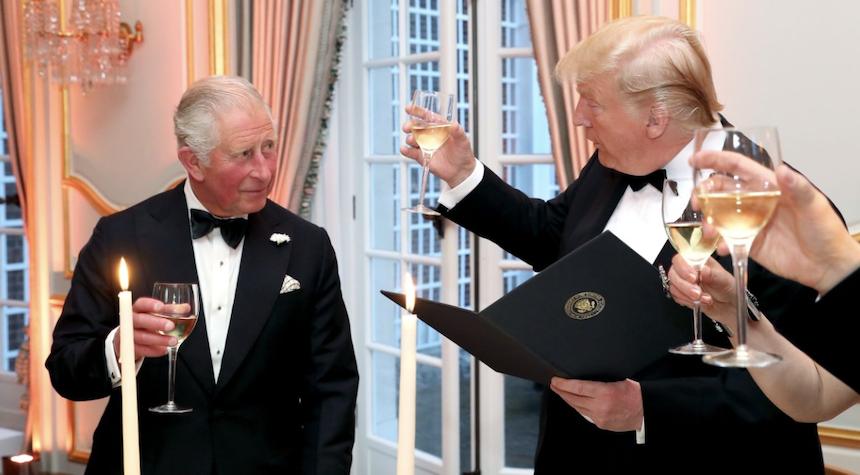
Trump’s itinerary includes a carriage procession, a state banquet, and military displays. Prince William and his wife Kate are scheduled to greet the former president and his wife, Melania. The British government hopes these ceremonial events will reinforce defense and security ties between the two nations.
It’s worth noting that this strategy of royal diplomacy is not unprecedented. Queen Elizabeth previously hosted leaders such as Russian President Vladimir Putin and Chinese President Xi Jinping. More recently, French President Emmanuel Macron’s state visit facilitated discussions on cross-Channel migration and post-Brexit relations.
The evidence suggests that while the monarchy’s domestic popularity may be fluctuating, its international diplomatic value remains significant. As King Charles’s treasurer James Chalmers stated, “Soft power is hard to measure but its value is, I believe, now firmly understood at home and abroad.”