
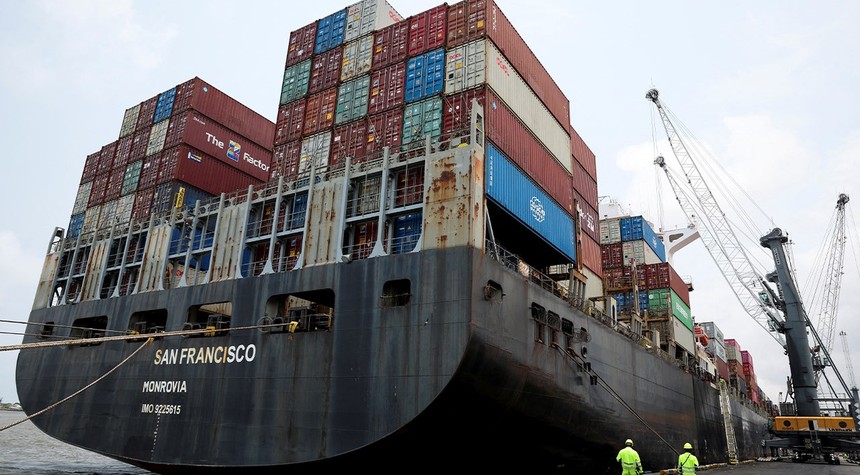
Here’s a number that should make every American’s stomach turn: 99%. That’s how much of our international maritime trade moves on ships we didn’t build, don’t own, and can’t control. Foreign-built. Foreign-owned. Foreign-flagged. And we’ve just been fine with that, apparently, while China cranks out more than half the world’s commercial ship tonnage and we’re left with scraps.
The Trump administration rolled out a maritime action plan Friday that’s been decades overdue. It’s not flashy. It won’t make great television. But it addresses a vulnerability so glaring you’d think someone would’ve noticed it sooner.
When the Shipyards Went Silent
You know what happens when an entire industry collapses? It doesn’t just take the factories with it. It takes the suppliers, the skilled workers, the engineers who know how to actually build things. American commercial shipbuilding didn’t just decline over the past few decades. It vanished. And with it went the entire ecosystem that supports both commercial vessels and, here’s the kicker, our Navy warships.
Admiral Daryl Caudle and Gen. Eric Smith laid it out pretty clearly. When you lose your commercial shipbuilding capacity, you’re not just losing the ability to build cargo ships. You’re gutting the industrial base that keeps your military shipbuilding alive. The suppliers dry up. The workforce retires or retrains for other jobs. The institutional knowledge just evaporates.
And then everyone acts surprised when Navy shipbuilding costs shoot through the roof, far outpacing inflation. Well, what did we expect? When you’re dependent on smaller supplier pools and single-source components because nobody else is building ships anymore, of course costs explode. It’s basic economics, the kind we used to understand before we outsourced our way into strategic dependence.
China Didn’t Stumble Into Dominance
Let’s be clear about something. China’s shipbuilding dominance didn’t happen by accident. While we were busy congratulating ourselves on efficiency and cost savings by shipping manufacturing overseas, Beijing was playing the long game. They built capacity. They invested in infrastructure. They trained workers. They understood something we forgot: industrial capacity is national security.
Roughly half of U.S. trade moves through the maritime domain. Think about that. Half. And 99% of that maritime trade relies on vessels we have zero control over. In peacetime, that’s a vulnerability. In any kind of crisis, it’s a catastrophe waiting to happen.
The administration’s plan, ordered by President Trump in an April executive order, represents the first comprehensive federal effort in decades to actually do something about this mess. Rebuild commercial shipbuilding. Expand the U.S.-flagged fleet. Strengthen maritime supply chains. It’s not revolutionary. It’s common sense that’s been ignored for far too long.
The Ripple Effect Nobody Talks About
Here’s what the experts are saying, and it matters. Rebuilding commercial shipbuilding capacity creates ripple effects that strengthen the entire industrial base. More commercial orders mean more suppliers stay in business. More shipyards stay open. More workers get trained. And suddenly, when the Navy needs to build warships, there’s actually an ecosystem to support it.
Officials argue that expanding commercial orders and modernizing shipyard infrastructure creates economies of scale. That benefits everyone. Commercial operators get better pricing. The Navy gets access to a broader supplier network. Costs stabilize. Production delays decrease.
It’s the kind of virtuous cycle we used to be good at creating, back when American industry actually made things instead of just managing supply chains that stretch across oceans to countries that don’t necessarily share our interests.
This ties directly into Trump’s broader push on rare earth minerals and industrial independence. You can’t have a strong defense without a strong industrial base. You can’t have a strong industrial base when you’ve outsourced everything to potential adversaries. These aren’t separate issues. They’re all part of the same strategic blindness that’s plagued American policy for decades.
What Limited Government Actually Means
Now, some folks will hear “comprehensive federal effort” and immediately think big government overreach. But here’s the thing. National defense is one of the core, legitimate functions of federal government. Ensuring we can actually transport our own goods without depending entirely on foreign vessels? That’s not government expansion. That’s government doing its actual job.
Limited government doesn’t mean weak government. It means focused government. It means the federal government handles what only the federal government can handle, like ensuring our maritime security, and stays out of everything else. This plan isn’t about the government picking winners and losers in the free market. It’s about removing the strategic vulnerability that comes from having no domestic capacity at all.
The free market works brilliantly for most things. But when global competitors are subsidizing their industries as part of long-term strategic planning, and we’re pretending market forces alone will protect national security, we’re not being principled. We’re being naive.
The Path Forward Isn’t Comfortable
Nobody’s pretending this’ll be easy or cheap. Rebuilding an industry that’s been gutted over decades takes time, investment, and political will. It means modernizing infrastructure. Training a new generation of shipbuilders. Convincing companies that U.S.-flagged vessels make strategic and economic sense.
But the alternative is continuing down a path where we’re dependent on foreign nations for basic economic functions. Where our Navy shipbuilding costs keep spiraling because there’s no adjacent commercial activity to support it. Where China keeps expanding its maritime dominance while we’re just along for the ride.
Senior administration officials warned that this dependence represents both a national and economic security vulnerability. They’re right. The question isn’t whether we can afford to rebuild American maritime capacity. It’s whether we can afford not to.
This isn’t about nostalgia for some imagined golden age. It’s about recognizing that strategic independence matters. That industrial capacity is national strength. That sometimes you need to rebuild what was foolishly allowed to crumble.
And it’s about time someone said it plainly and actually did something about it.
Related: When American Athletes Compete for Communist China, Something’s Broken