
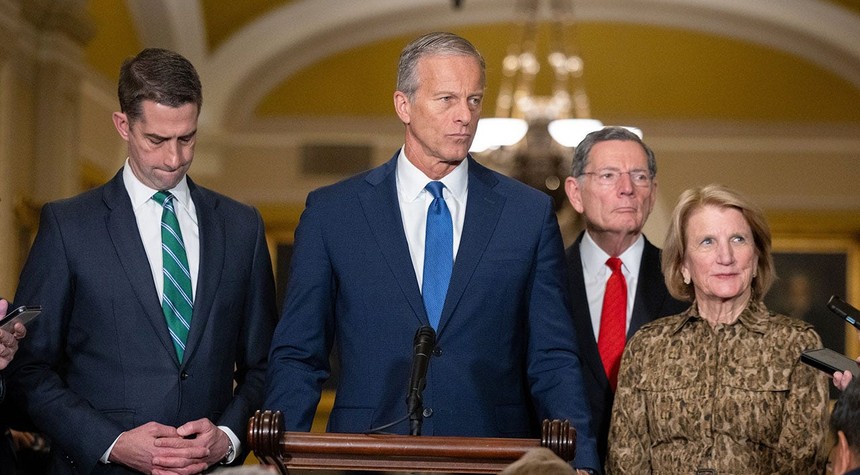
John Thune isn’t backing down, and frankly, he’s tired of armchair strategists telling him how to run the Senate.
The South Dakota Republican finds himself in an uncomfortable spot, caught between President Trump’s expectations, a fired-up conservative base demanding action on voter ID, and the cold reality of Senate arithmetic. The Safeguarding American Voter Eligibility Act, better known as the SAVE America Act, has become the latest battleground where political theater meets legislative practicality. And Thune is saying what needs to be said: the talking filibuster everyone’s clamoring for isn’t some magic wand that makes Democrat opposition disappear.
“Nobody really knows how this ends, and the people who are out there saying they do, don’t,” Thune told Fox Digital. It’s a refreshingly honest admission in a town that trades in false certainty.
Here’s what’s actually happening. Senate Republicans are testing Democrat resolve on voter ID legislation, but not through the dramatic talking filibuster that conservative activists have been demanding. That tactic, where senators must physically hold the floor to maintain a filibuster, sounds great in theory. It conjures images of exhausted Democrats finally caving after hours of debate, right? Except it’s never actually worked that way in modern Senate history.
The talking filibuster eats up the Senate’s most precious resource, which is time. And during a government shutdown, burning through hours or days of floor time to prove a point isn’t just impractical. It’s legislative malpractice. Thune knows this because he’s watched Democrats consider the exact same move under Harry Reid and Chuck Schumer, only to reject it both times. They understood the price was too steep.
But try explaining strategic patience to a movement that’s been promised quick victories. The online conservative network, energized by Trump’s return to the White House, wants results yesterday. They see requiring proof of citizenship to vote as common sense, which it is. They wonder why Republicans control the Senate but can’t seem to pass what should be straightforward legislation. And their frustration is legitimate, even if their proposed solution isn’t viable.
This is where Thune’s accusations about “creating false expectations” cut to the heart of a bigger problem in conservative politics. Too many voices promise the base that complicated legislative problems have simple solutions. Just fight harder. Just use this one weird parliamentary trick. Just make Democrats talk until they collapse. It’s political snake oil, and it’s making governing harder for the people who actually have to deliver.
The SAVE America Act would require documentary proof of citizenship for voter registration in federal elections. It’s popular with Republicans and conservative voters who view election integrity as non-negotiable. Democrats oppose it, arguing it creates barriers to legitimate voting. The 60-vote threshold means Republicans need at least seven Democrats to cross over, which isn’t happening. No amount of talking filibuster changes that math.
What Thune is doing instead is forcing Democrats to publicly defend their opposition through marathon debate. It’s not flashy, but it puts every senator on record. That matters for 2026 midterms when vulnerable Democrats in red or purple states will have to explain why they voted against requiring citizenship verification for voting.
The Senate majority leader is playing the long game while critics demand instant gratification. He’s thinking about maintaining Republican credibility and Senate functionality while others want pyrrhic victories that make good social media content but accomplish nothing substantive.
You know what’s actually rebellious here? A Senate leader telling his own party’s base that their preferred strategy won’t work. That takes more courage than performative floor fights that everyone knows will fail. Thune could easily cave to the pressure, launch the talking filibuster, watch it collapse after wasting critical time, and then blame Democrats. Instead, he’s being honest about legislative reality.
The fundamental tension remains unresolved. Republicans control the Senate but not with the supermajority needed to overcome Democrat obstruction on controversial bills. That’s the price of the filibuster, which conservatives generally support because it protects against Democrat overreach when the majority flips. You can’t have it both ways, celebrating the filibuster as a guardrail against progressive legislation while demanding it be circumvented for conservative priorities.
Thune’s critics aren’t entirely wrong to push for aggressive tactics. Republicans have spent years promising to fight harder, only to fold when things get difficult. That pattern has eroded trust between leadership and the base. But the solution isn’t adopting failed strategies because they feel more combative. It’s being strategic about which fights to pick and how to win them.
The SAVE Act debate will continue, and Democrats will keep blocking it. Thune’s approach won’t satisfy everyone, but at least it’s grounded in how the Senate actually works rather than how activists wish it worked.
Related: The Iranian Cyber Warfare Machine Just Lost Four of Its Best Weapons