
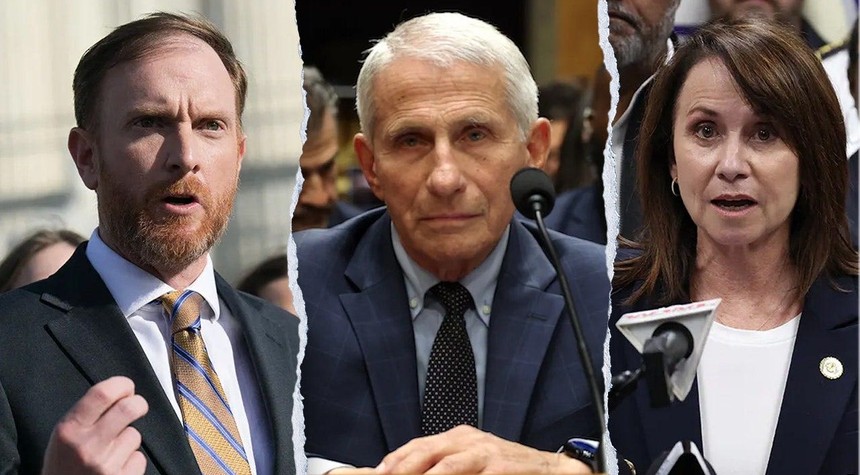
When Dr. Anthony Fauci invoked the Fifth Amendment 111 times during Senate testimony about his COVID-19 response, he probably thought he was building a wall between himself and accountability. Then President Biden handed him a federal pardon, and that wall looked pretty solid. But here’s the thing about our system of government that a lot of people forget: states have power too.
West Virginia Attorney General John McCuskey just joined forces with Florida’s James Uthmeier and Louisiana’s Liz Murrill to launch a joint investigation into Fauci at the state level. The federal pardon doesn’t touch state violations. It’s a simple fact of constitutional law that suddenly matters a whole lot.
“Americans need to have confidence that the medical professionals that are giving them information during medical catastrophes like COVID, that that information is sound,” McCuskey told Fox News Digital. “Rebuilding that trust begins with holding accountable the people who caused it to be lost.”
That’s the heart of it right there. This isn’t about revenge or political theater. It’s about trust, and frankly, trust in public health authorities is shattered. You can see it everywhere. Parents questioning routine vaccinations. People dismissing legitimate medical advice because they remember being told masks didn’t work, then did work, then maybe two masks worked better. The contradictions piled up like cordwood.
Uthmeier kicked things off back in July, right after Fauci’s Fifth Amendment marathon. When someone invokes that constitutional protection over a hundred times, you’re allowed to wonder what they’re protecting themselves from. Senator Rand Paul had been exposing information that raised serious questions about Fauci’s role in funding research at the Wuhan Institute of Virology, about the origins of COVID-19, about whether the American people were told the truth when it mattered most.
The federal government might be done asking those questions, but state governments aren’t bound by that decision. Each state has its own laws governing fraud, public safety, and professional conduct. If Fauci violated Florida law or Louisiana law or West Virginia law, a presidential pardon doesn’t make that disappear.
This is actually how the founders designed things to work. When federal power becomes too concentrated or too protective of its own, states can step in. It’s messy sometimes, sure. But it’s also a feature, not a bug.
Think about what happened during COVID. States were told to follow federal guidance that kept changing. Businesses closed. Schools shut down. People lost jobs, lost years of their lives to isolation, watched their kids struggle through Zoom classes. And through it all, Fauci was the face of that guidance, the voice of authority telling everyone what to do.
If that authority was misused, if information was hidden or manipulated, states have every right to investigate. Their citizens were harmed. Their economies were damaged. Their laws may have been violated.
The three attorneys general aren’t grandstanding here. They’re doing exactly what their offices exist to do: protect their citizens and enforce their laws. McCuskey’s comment about rebuilding trust isn’t just rhetoric. Public health depends on trust. The next pandemic, whenever it comes, will require people to listen to medical authorities. Right now, millions won’t. That’s a problem.
Biden’s pardon was supposed to close the book on Fauci’s accountability. Instead, it might have just moved the story to a different chapter. Federal immunity doesn’t equal state immunity. That’s not a loophole. That’s federalism working exactly as intended.
Related: San Diego Border Officers Just Took $67 Million in Poison Off Our Streets