
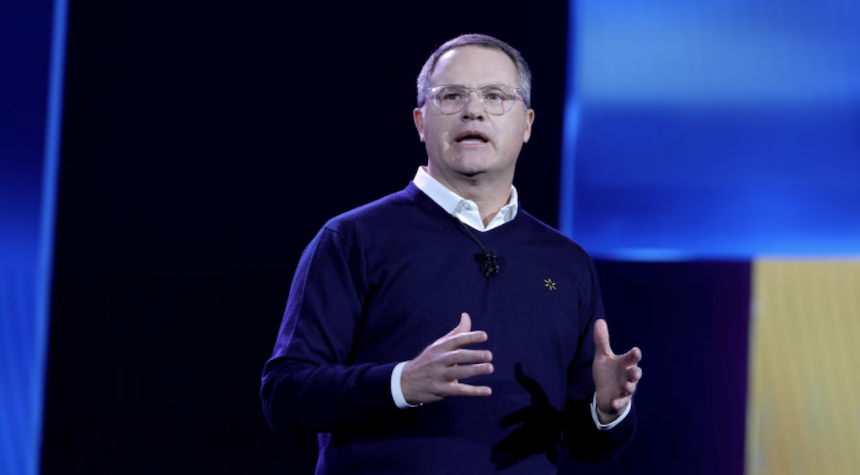
Reports from the heart of American retail indicate a significant shift in the landscape of employment. Walmart CEO Doug McMillon has addressed his workforce regarding the impending influence of artificial intelligence on jobs across the company and beyond.
According to The Wall Street Journal, McMillon stated, “It’s very clear that AI is going to change literally every job.” This declaration came during a workforce conference at Walmart’s headquarters in Bentonville, Arkansas.
Walmart executives are now incorporating discussions about AI’s impact into nearly all major planning meetings. They are closely monitoring job roles to determine which are expanding, contracting, or remaining stable. This information is being used to identify areas where additional training and support may be necessary for employees.
You May Also Like: UN Delegates Storm Out of Netanyahu’s Speech Following Palestinian Leader Cheers
The significance becomes clear when we consider the scale of Walmart’s operations. With a global workforce of approximately 2.1 million, the company projects that this number will remain stable over the next three years, even as revenue grows. However, the nature of these jobs is expected to undergo a significant transformation.
Walmart is not alone in facing this technological shift. Reports indicate that other major corporations are also grappling with the AI revolution. Accenture CEO Julie Sweet has spoken of “exiting” employees who are no longer considered useful in the AI era, while Ford Motor Co. CEO Jim Farley has made the stark prediction that “Artificial intelligence is going to replace literally half of all white-collar workers in the U.S.”
The evidence suggests that AI’s influence is already being felt by consumers. Walmart has implemented AI-powered chatbots for customers, suppliers, and employees, and is utilizing the technology to monitor its supply chain and product trends.
This raises important questions about the future of work and the preparedness of the American workforce for this technological shift. As McMillon stated, “Our goal is to create the opportunity for everybody to make it to the other side.”
The full impact of artificial intelligence on the job market remains to be seen, and it will be crucial for both employees and employers to adapt to these changes in the coming years.