
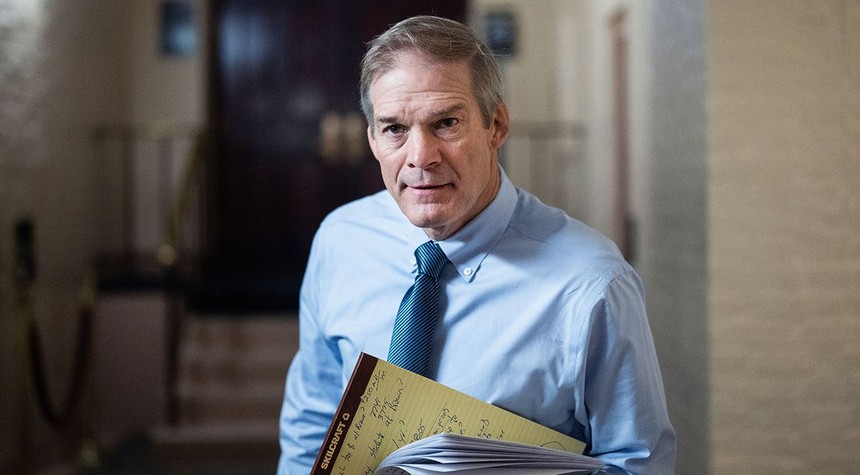
The Department of Justice subpoenaed House Judiciary Committee Chairman Jim Jordan’s personal phone records in 2022, demanding data spanning more than two years in what appears to be an egregious violation of congressional oversight authority.
The subpoena reveals that a federal prosecutor who subsequently joined special counsel Jack Smith’s January 6 investigation ordered Verizon to surrender phone data dating back to January 1, 2020. This represents the most expansive known subpoena targeting current and former members of Congress during the Arctic Frost investigation, which ultimately resulted in Smith bringing election-related charges against President Donald Trump.
Let us be clear about what happened here. The Department of Justice, ostensibly an executive branch agency subject to congressional oversight, decided to investigate the very congressman responsible for overseeing that department. Jordan was serving as the ranking Republican on the House Judiciary Committee when prosecutors demanded his phone records. The irony would be amusing if it were not so constitutionally problematic.
The subpoena did not target the content of Jordan’s communications but rather sought toll records showing when calls and messages were sent and received, along with information about Jordan’s contacts. The request also included three other redacted phone numbers and came with a one-year gag order signed by a District of Columbia magistrate judge.
Smith did not assume his role as special counsel until seven months after this subpoena was issued, meaning the request originated during the broader DOJ investigation. However, the prosecutor who signed the subpoena later joined Smith’s team, creating a direct connection between these early investigative steps and Smith’s subsequent prosecution efforts.
Jordan joins a growing list of Republican lawmakers who recently discovered the DOJ sought their communications records. Former House Speaker Kevin McCarthy’s records were targeted in 2023. Senate Judiciary Committee Chairman Chuck Grassley revealed that at least ten Republican senators, including Lindsey Graham, Marsha Blackburn, Ted Cruz, and Ron Johnson, had their records subpoenaed as well.
The constitutional implications here are staggering. Republicans have rightly criticized these subpoenas as violations of the separation of powers, particularly the speech or debate clause, which protects congressional members in the performance of their legislative duties. When the executive branch begins investigating the legislative branch members tasked with overseeing it, we have entered dangerous constitutional territory.
Smith has defended his investigation, claiming it adhered to DOJ policies and that the subpoenas were “entirely proper” and narrowly tailored. This defense rings hollow when examining the scope of these requests. A subpoena covering more than two years of a congressman’s phone records hardly qualifies as “narrowly tailored” by any reasonable standard.
Verizon complied with the subpoena and produced documents to the DOJ, according to sources familiar with the matter. The telecommunications company had little choice given the legal compulsion, but the ease with which federal prosecutors obtained records of a sitting congressman’s communications should concern every American who values constitutional boundaries.
The Arctic Frost investigation and Smith’s subsequent special counsel appointment have consistently demonstrated a troubling pattern of prosecutorial overreach. Targeting congressional Republicans who questioned the 2020 election or the January 6 events suggests an investigation driven more by political considerations than legitimate law enforcement concerns.
Facts matter. The timeline matters. And the facts show federal prosecutors began targeting Republican lawmakers’ communications well before Smith’s formal appointment, during a period when those same lawmakers were conducting legitimate oversight of the very department now investigating them. This is not how justice operates in a constitutional republic.
Related: Healthcare Fraud Reaches Crisis Levels as Obamacare Subsidies Face Expiration