
When No Means Yes in Federal Court
Judge Ana Reyes just performed a magic trick that would make any first-year law student blush. She took a statute that explicitly bars judicial review of Temporary Protected Status decisions and decided she could review it anyway. The intellectual gymnastics are impressive, if not entirely convincing.
Here’s what the law actually says: “There is no judicial review of any determination” regarding TPS. You’d think that language is pretty clear. Congress doesn’t usually write things like that unless they mean it. But Reyes, a Uruguayan-born Biden appointee with Harvard credentials, found a loophole that apparently nobody else noticed in the decades since Congress passed this law.
Her reasoning? Sure, she can’t review the determination itself, but she can review the process. It’s like saying you can’t question whether someone decided to fire you, but you can absolutely question how they arrived at that decision. The distinction is so thin you could slip it under a door.
The Real Issue Nobody Wants to Discuss
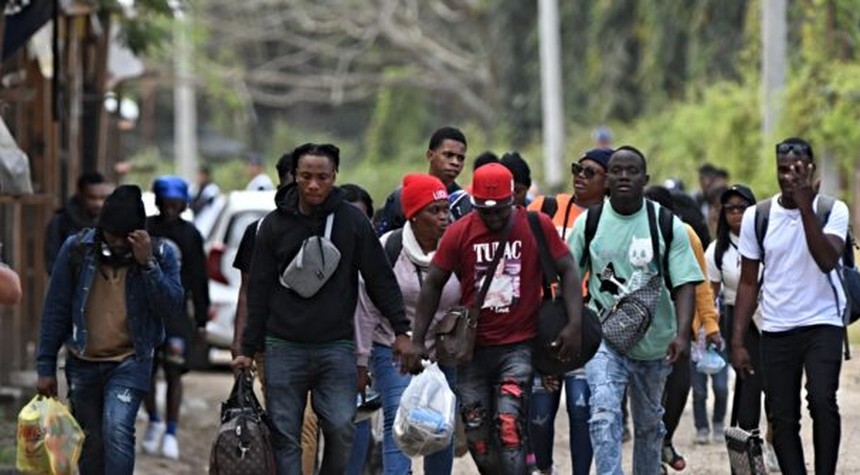
Let’s talk about what’s actually happening here. We’ve got 350,000 Haitians living in the United States under what’s called Temporary Protected Status. Notice that word? Temporary. It’s right there in the name.
Haiti’s been a troubled place for a long time. The government’s dysfunctional, the economy’s a wreck, and yes, conditions are rough. Nobody’s denying that. But here’s the uncomfortable truth: the skilled Haitians who made it to America don’t want to go back and help rebuild their country. Instead, they’re staying here while the people left behind continue struggling without the leadership and skills that could actually make a difference.
There’s a U.N.-funded peacekeeping force in Haiti right now. International resources are flowing in. But we’re supposed to believe that American taxpayers should indefinitely support hundreds of thousands of people because their home country is poorly governed? That’s not how temporary status works. Or at least, it’s not how it’s supposed to work.
The Judicial Activism We’re Not Supposed to Notice
Reyes didn’t just block Trump’s termination of TPS on technical grounds. Read her decision and you’ll see it’s bookended with policy arguments about economics and what’s best for foreign migrants. That’s not a judge interpreting law. That’s a judge making policy.
You know what’s remarkable? The statute exists precisely because Congress didn’t want judges doing exactly what Reyes just did. They saw this coming. They wrote “no judicial review of any determination” because they knew that sympathetic judges would find ways to gum up the works if they could.
Tricia McLaughlin, spokeswoman for the Department of Homeland Security, called it correctly: “This is lawless activism.” She’s not wrong. When a judge invents distinctions between “determinations” and “processes” to circumvent explicit congressional language, we’ve left the realm of interpretation and entered the realm of rewriting.
The Immigration System Nobody Defends
Here’s a broader question worth asking: why do we have immigration laws if judges can simply ignore them when they don’t like the outcomes?
The American immigration system is supposed to balance compassion with sovereignty. We’re a generous nation. We take in more legal immigrants than any country on earth. But we’re also a nation of laws, and those laws mean something. Or they should.
Temporary Protected Status was designed for genuine emergencies. Natural disasters. Sudden conflicts. Situations where sending people back immediately would be dangerous or impossible. It wasn’t designed to become permanent residency through the back door.
But that’s exactly what’s happened. TPS has become another tool in the arsenal of people who want open borders without saying they want open borders. Grant temporary status, extend it indefinitely, and then act shocked when anyone suggests actually enforcing the temporary part.
What Happens Next
The Trump administration will appeal, obviously. This decision won’t stand forever. But that’s not really the point, is it? The point is delay. Every month these cases wind through the courts is another month the status quo continues.
And that’s the game. Activist judges know they don’t have to win permanently. They just have to win long enough. Tie things up in litigation, create uncertainty, make enforcement so difficult that administrations give up.
It’s exhausting, frankly. We elect presidents to make executive decisions. Congress passes laws to set boundaries. And then judges with lifetime appointments and personal policy preferences decide none of that matters because they’ve found some creative reading of the statute that nobody else noticed.
Judge Reyes might have impressive credentials. Harvard Law isn’t easy to get through. But impressive credentials don’t give you the authority to rewrite statutes. They don’t let you substitute your judgment for Congress’s explicit instructions.
The law said no judicial review of any determination. That should have been the end of it. Instead, it’s just the beginning of another drawn-out legal battle that never should have happened in the first place.
Related: Senate Republicans Sound Alarm on Chinese Vapes Doubling as Surveillance Tools