
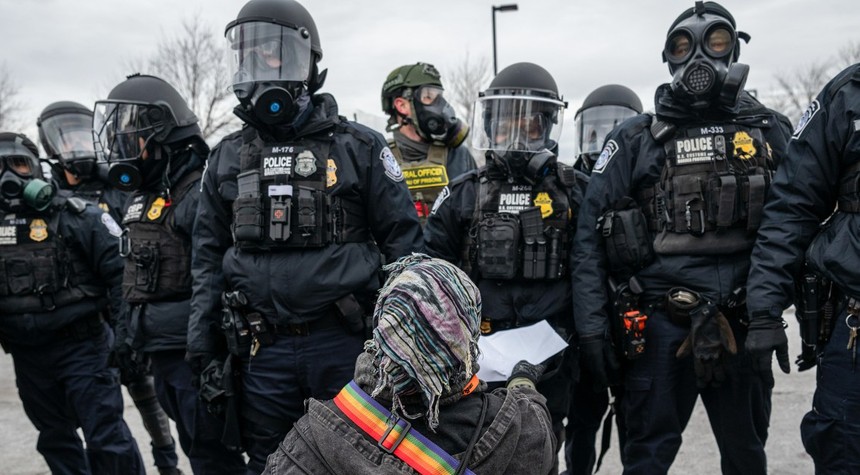
The Return of Common Sense Immigration Enforcement Is Breaking Records
Something remarkable happened while the usual suspects in blue cities were busy writing press releases about their sanctuary policies. More than a thousand local law enforcement agencies across America decided they’d rather enforce the law than ignore it.
The numbers don’t lie. Agreements between ICE and local police departments shot up 950 percent in Trump’s first year back in office. That’s not a typo. We’re talking about 1,168 agencies now participating, up from a measly 135 under Biden. It’s the kind of statistical earthquake that tells you everything about what sheriffs and police chiefs actually think when political pressure isn’t crushing them.
These are the 287(g) agreements, named after a section of immigration law that sounds boring until you realize what it actually means. Local officers get trained and deputized to help ICE identify and arrest people who shouldn’t be here. It’s cooperative federalism at its finest, the kind of thing the Founders would recognize. States and the feds working together on a problem that affects everyone.
You know what’s interesting? The program isn’t new. It existed during Trump’s first term and before that too. Obama killed it because, well, enforcing immigration law apparently became controversial somewhere along the way. The logic never made sense. If someone’s here illegally and they’re encountered by police, why exactly should that officer pretend not to notice? We don’t tell cops to ignore other violations of federal law.
When Reality Meets Resistance
Not everyone’s thrilled, obviously. Dallas PD turned down the opportunity, worried their officers would get stretched too thin. That’s a legitimate operational concern, and honestly, it’s the kind of practical pushback that deserves consideration. Police departments have budgets and manpower limits. If signing up means patrol cars sit empty, that’s a problem worth solving.
Montgomery County in Maryland took a different approach. Their statement was carefully worded, almost lawyerly. They won’t enforce “civil immigration orders” but they need warrants signed by judges. It’s the kind of position that sounds reasonable until you think about it for thirty seconds. Immigration violations aren’t parking tickets. They’re federal offenses with real consequences for national security and public safety.
Then there’s New Orleans, where you’ve got local leaders dragging their feet while Louisiana’s governor, Jeff Landry, issued an executive order directing state agencies to help ICE. It’s a perfect snapshot of the disconnect between what elected officials in certain cities want and what their states actually need. Landry gets it. When the federal government finally decides to enforce immigration law, states shouldn’t be throwing up roadblocks.
The whole debate exposes something deeper about how we think about law enforcement in this country. Either laws matter or they don’t. Either we have borders or we don’t. The idea that local police should actively avoid cooperating with federal immigration authorities is bizarre when you step back and look at it clearly.
Why This Matters Beyond the Numbers
These agreements represent more than administrative paperwork. They’re about sheriffs and police chiefs in communities across America saying enough is enough. They’ve watched their towns change. They’ve dealt with the crime that follows when immigration law becomes optional. They’ve sat through too many briefings about cartels and human trafficking.
The 950 percent increase tells you that when given the choice, when the political winds shift even slightly, law enforcement wants to do its job completely. Not partially. Not with one hand tied behind its back.
Critics will say this creates fear in immigrant communities, that people won’t report crimes if they think police might check immigration status. It’s a tired argument that assumes immigrants can’t distinguish between legal and illegal status, between cooperation and criminality. Communities are safer when everyone knows the rules apply equally.
The task force model works because it’s efficient. ICE doesn’t have unlimited agents. Local police are already on the streets, already making stops, already encountering people who might be immigration violators. Training officers to recognize when federal law is being broken and giving them authority to act just makes sense.
Some departments will stay out. That’s their choice, though it’s worth asking what they’re really protecting and who benefits from their absence. But the thousand plus agencies that signed up? They’re the ones writing the real story here. They looked at their communities, looked at the mission, and decided cooperation beats obstruction every single time.
The pendulum swung hard toward non-enforcement for four years. Now it’s swinging back, and the velocity tells you everything about where the center actually sits. Most of America wants immigration law enforced. Most police want to enforce it. And now, finally, they can.
Related: AOC Can’t Answer the Taiwan Question and That Should Terrify You