
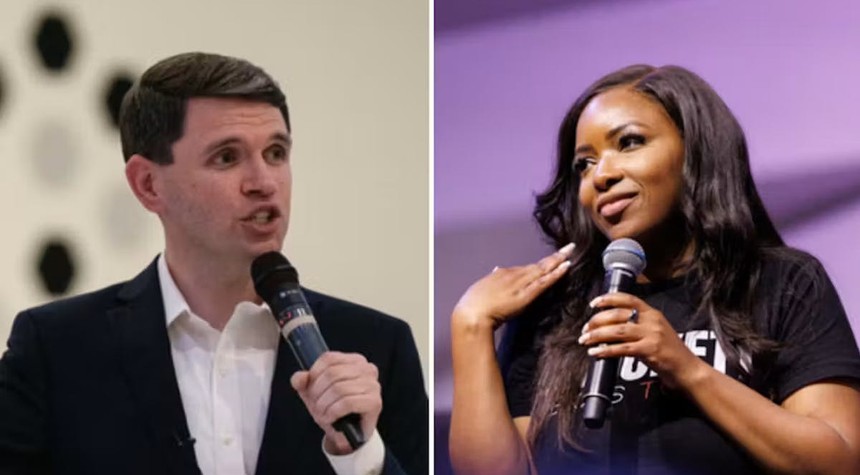
There’s a particular kind of silence that speaks louder than endorsements, and right now that silence is deafening around James Talarico’s Senate campaign in Texas. Rep. Jasmine Crockett, a Democrat from the Dallas area, just did something most politicians avoid like the plague. She told the truth about her party’s Senate nominee, and it wasn’t pretty.
When CNN’s Laura Coates asked Crockett about black voter enthusiasm for Talarico’s campaign against Republican Attorney General Ken Paxton, the congresswoman didn’t mince words. “I don’t think that there is excitement,” she said flatly. No spin. No carefully constructed talking points about momentum or grassroots energy. Just the hard reality that Democrats are trying desperately to ignore.
You know what’s fascinating here? Crockett isn’t some rogue agent or Republican plant. She actually endorsed Talarico after losing to him in the March primary. This is coming from inside the house. When your own team can’t drum up enthusiasm for you on national television, that’s not a messaging problem. That’s a candidate problem.
Crockett explained that black voters “are practical” and might support Talarico without feeling excited about it. But here’s where her analysis cuts deep. She acknowledged that excitement matters when it’s raining on Election Day, when the lines stretch around the block, when showing up requires actual sacrifice. Practical support gets you a checkbox. Enthusiasm gets you a movement. Guess which one wins competitive races?
The congresswoman’s comments build on a pattern that should terrify Democratic strategists. She’s repeatedly cast doubt on Talarico’s viability, refused to commit to campaigning with him, and now she’s openly questioning whether he can connect with the very voters Democrats need most. This isn’t friendly fire. This is a flashing warning sign that something fundamental isn’t working.
Texas state Rep. Jolanda Jones has been even more direct about the problem. She warned that Talarico’s campaign has failed to engage black elected officials and political organizations in any meaningful way. “Do I think that Talarico’s refusal thus far to engage black electeds and the black infrastructure has put him at a disadvantage? Absolutely,” Jones said earlier this summer. She added bluntly that if he continues on this path, he’s going to lose.
Think about that for a moment. These aren’t Republicans trying to depress Democratic turnout. These are Democratic elected officials essentially telling their nominee that he’s botching the fundamentals of coalition politics. Jones even specified what needs to happen, saying Talarico needs to pay for voter outreach in black communities. It’s transactional, sure, but politics always has been. You want votes? You invest in the infrastructure that delivers them.
Crockett pointed to Beto O’Rourke as a cautionary tale, and honestly, she’s right. O’Rourke raised mountains of cash, ran around the entire state, generated national headlines, and still came up short. Twice. The Democratic fantasy that one charismatic candidate can turn Texas blue through sheer force of will keeps crashing against the rocks of reality. Texas remains stubbornly conservative because, well, Texans tend to prefer conservative policies.
Here’s where it gets interesting from a strategic standpoint. Crockett said she watches the money, specifically where the national party committees decide to invest. Right now, neither the NRSC nor the DSCC is pouring resources into Texas. That tells you what their internal polling actually shows, regardless of whatever public polls show Talarico narrowly ahead. Campaign committees don’t leave winnable races on the table. If the money isn’t flowing, the race isn’t really competitive.
The broader context makes Talarico’s challenge even steeper. He’s running in one of America’s most culturally conservative states while carrying baggage that plays terribly with the voters he needs. His fringe views on Christianity, his vocal support for transgender children, his apparent disdain for the American flag—these aren’t minor footnotes. In Texas, these are disqualifying positions for huge swaths of the electorate, including many minority voters who tend to be more socially conservative than the Democratic Party’s activist base.
This is where national Democrats keep missing the plot. They assume minority voters will automatically align with progressive social positions because of shared economic interests or historical party loyalty. But actual people are more complicated than demographic categories. Black and Hispanic voters in Texas include plenty of folks who go to church regularly, believe in traditional family structures, and think patriotism matters. Talarico’s positions don’t speak to them. They repel them.
Crockett mentioned that Democrats would need strong enthusiasm to overcome what she and Coates called “suppressive tactics.” But calling election integrity measures suppressive has become such a reflexive talking point that it obscures the real issue. If your candidate can’t generate enthusiasm, if black voters aren’t excited to show up, maybe the problem isn’t the system. Maybe the problem is that you’re asking people to vote for someone who doesn’t represent their values or priorities.
With 67 days left until the election, Talarico faces a mathematical reality that no amount of national media attention can fix. He needs overwhelming minority turnout and support to compensate for his weakness with the white voters who still make up the majority of the Texas electorate. But he’s not getting enthusiasm from black voters, he’s not investing properly in black political infrastructure, and his own party’s elected officials are openly skeptical of his chances.
The most damning moment in Crockett’s interview might have been the simplest. When NBC asked if she thinks Talarico can win, she responded with two words: “I don’t know.” Not “absolutely,” not “we’re fighting for every vote,” not even a qualified yes with caveats. Just uncertainty from someone who should be his strongest surrogate.
That’s not how winning campaigns sound 67 days out. That’s how you describe a candidate who’s already losing, even if nobody wants to admit it yet.
Related: The Democrat Who Claims Immigration Is Fake News Lives Nowhere Near Immigrants